In short: Pinterest keywords for artists are the words and phrases collectors and art lovers actually type into Pinterest’s search, like “botanical watercolor art” or “abstract wall art for living room.” To find the right ones, use Pinterest’s free built-in tools such as the search bar, guided-search tiles (I call these keyword bubbles), and Trends tool to see the exact phrases people search, then weave the ones that genuinely fit your work into your Pin titles, descriptions, text overlays, and boards. No expensive tools or SEO jargon required.
If you’ve been making Pins and wondering why your art isn’t getting seen, I want to help reframe the problem for you: it’s almost never that your work isn’t good enough. It’s usually that Pinterest can’t yet tell what your work is about because the right words aren’t there to guide it.
Keywords are those words. And the good news is that finding the right Pinterest keywords for artists doesn’t require SEO expertise, expensive software, or posting excessively. It just requires knowing where to look and how to choose. Shall we walk through it together?
What are Pinterest keywords (and why artists need their own kind)?
Pinterest is a search engine, not a social feed. When someone wants art for their home, they type something into the search bar like “colorful abstract wall art,” “handmade ceramic mugs,” or “botanical watercolor prints”. Pinterest then scans everything on the platform to decide what to show them.
Keywords are the words and phrases that connect your Pin to that search. They tell Pinterest what your Pin, your boards, and your whole account are about, so it can match you to the right person at the right moment.
Here’s the part most generic advice misses: artists need different keywords than marketers do. A business coach optimizes for “lead generation.” You’re not selling lead generation, you’re sharing original watercolor paintings or modern art prints for living rooms. Your keywords live in the language of art, medium, subject, style, and the room your work will hang in. That’s a very different vocabulary, and it’s where your real buyers are searching.
Why keywords matter more than posting more
It’s tempting to think the answer is volume: pin more, post more, hustle harder, tear your hair out! But on a search engine, clarity beats noise. A Pin with the right keywords can surface in search for months, even years, consistently bringing the right people to your work. A Pin with vague or missing keywords can be beautiful but may never be found.
So before you make one more Pin, it’s worth getting your keywords right. This is the heart of Pinterest SEO for artists and it’s completely within your control.
Where to find Pinterest keywords for artists (free)
You don’t need a paid tool to start. Pinterest hands you its own search data if you know where to look.
1. The search bar (autocomplete)
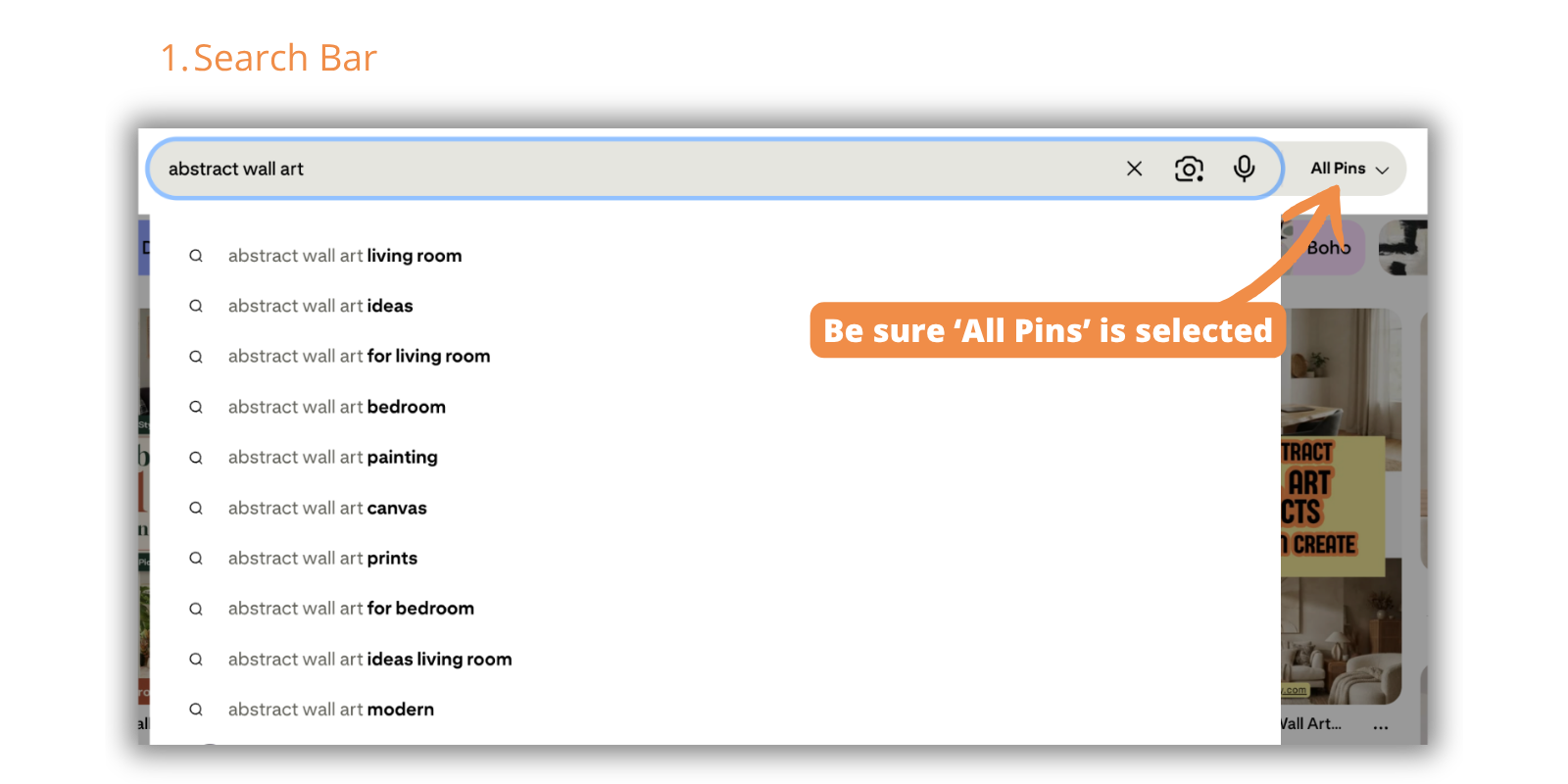
Start typing a phrase related to your work, for example, “abstract wall art”. Notice how Pinterest shows you a drop-down of what real people are searching: living room, for bedroom, modern, canvas, prints. Those are live keywords, straight from your buyers. Jot down the ones that fit your art. (I keep a perpetual list in Google Docs where it’s easy to find).
2. The guided-search tiles
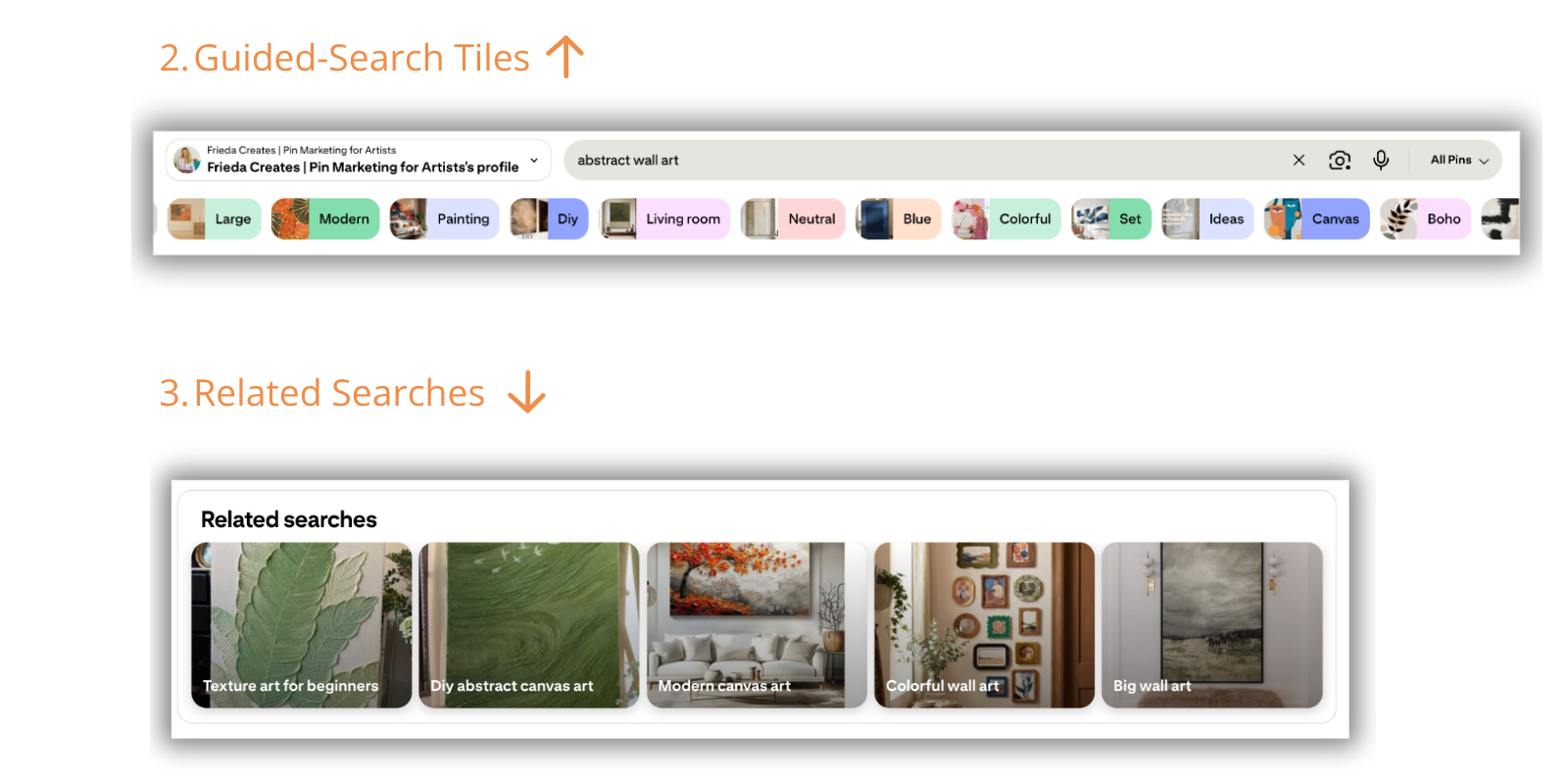
Run a search and look at the colored tiles that appear just below the search bar (large, modern, blue, colorful, boho, etc.). Each is a popular way people refine that search. They’re a goldmine of specific, on-topic phrases to combine with your main keyword.
3. Related searches
Scroll the search results page until you find related terms tucked below, keep scrolling to find them, sometimes there are several. These widen your keyword bank with phrases you might not have thought of, so long as they genuinely match what you make.
4. The Pinterest Trends tool
For timing and demand, the Pinterest Trends tool shows you which keywords are rising, seasonal, or timeless, so you can plan your Pins around what people will be searching next.
5. Your peers’ Pins
Search your niche and notice which Pins rank at the top of the pages (you may need to scroll past the ads). Read their titles and descriptions. You’re not copying, you’re learning the vocabulary your shared audience responds to.
6. A keyword tool, when you want to go deeper
When you’re ready to research faster and see search volume at a glance, a tool like Pin Inspector (linked in my Resources) does the digging for you. It’s the one I reach for when I want a bigger keyword bank in less time, but you can get a long way on the free methods above first.
How to choose the right keywords for your art
Match buyer intent. What would your ideal collector actually type into search? Someone shopping for your work may search for “original abstract painting” or “abstract wall art for living room,” not “abstract painting techniques” (that’s a fellow artist wanting to make art, not buy it). Choose the phrases that attract buyers, not just browsers.
Get specific. Broad terms like “art” are crowded and ad-saturated. Specificity is the small artist’s advantage. “Colorful abstract watercolor” or “botanical watercolor art prints” has less competition and a clearer match to your work so you surface for the people who want exactly what you make.
Stay in your lane. A keyword only helps if it really fits you. Chasing an off-topic trending phrase might earn a few glances, maybe a click, but it confuses Pinterest about what you’re about and ultimately hurts how your real work gets found. A strategy called topic relevance works by giving the algorithm clear, consistent signals; staying true and on topic is a win.
Ready to put this into practice? My self-paced course, Pinterest Primer, walks you through keywords, boards, and Pins step by step so you can set up Pinterest the right way without the guesswork.
Keyword examples by art type
To make it concrete, here’s how a search-friendly keyword translates across different kinds of artists:
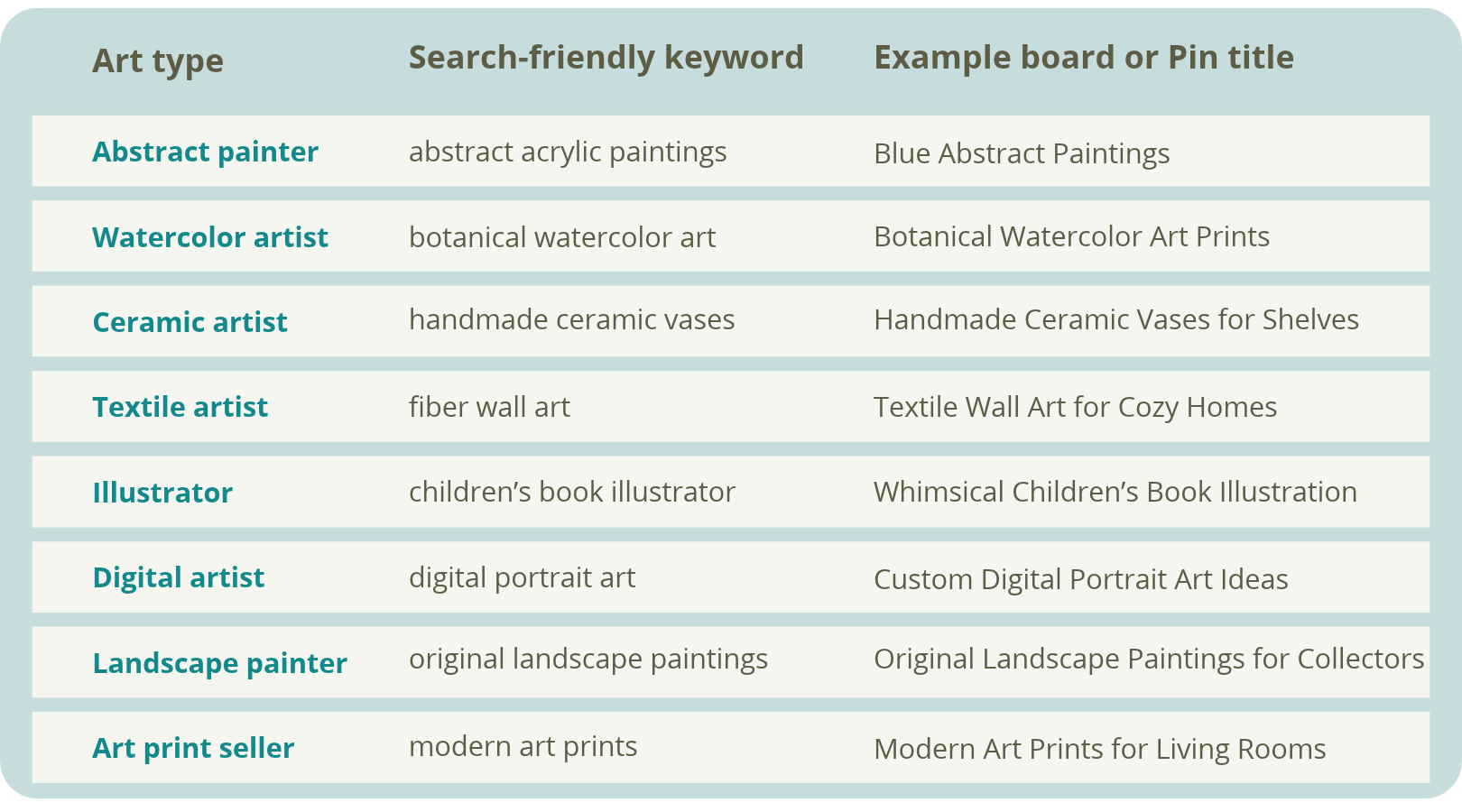
Notice the pattern: each keyword names the medium or subject plus a hint of who it’s for or where it goes. That specificity is what helps the right person find exactly what you make.
Where to use your keywords
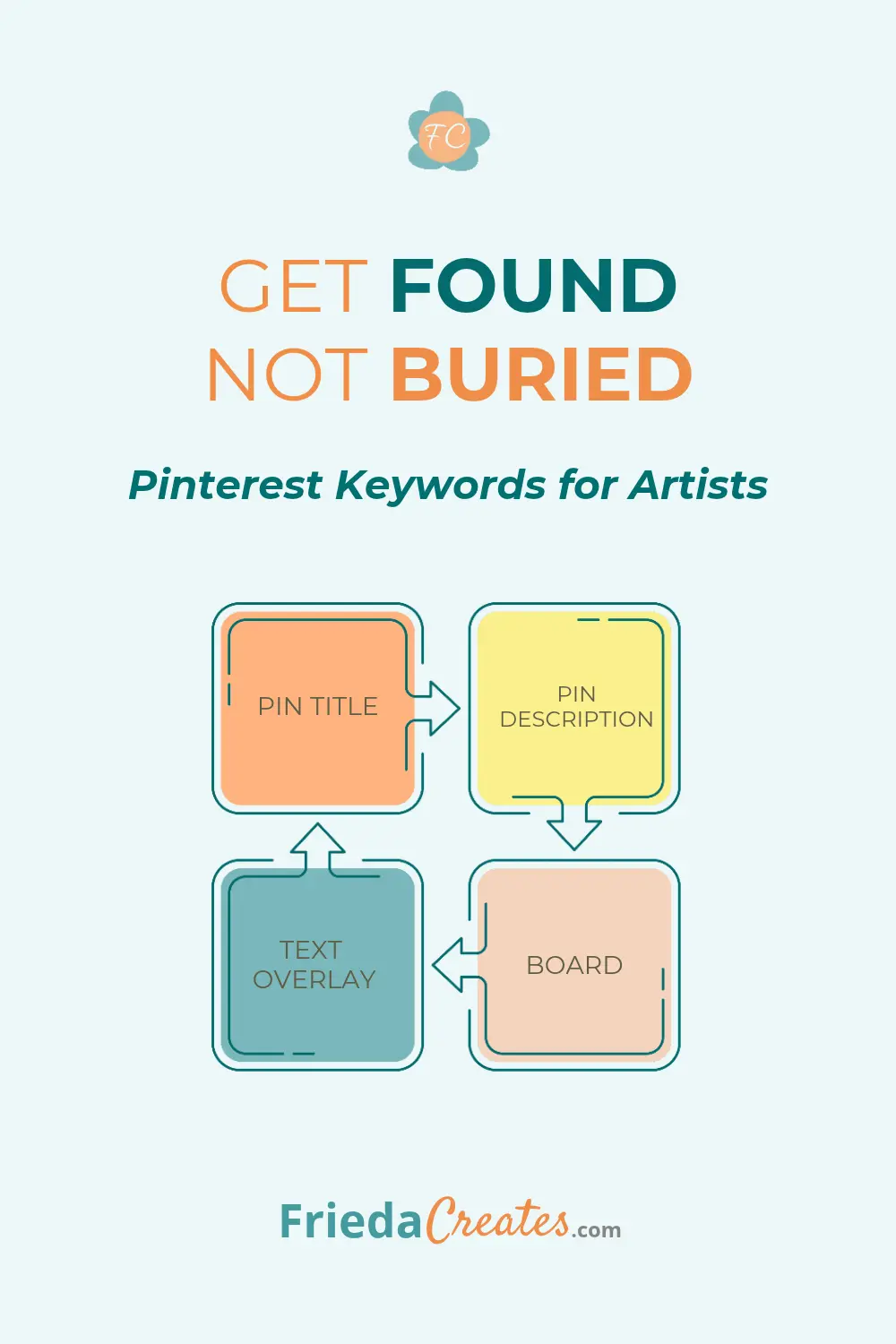
A keyword only works if Pinterest sees it. Once you’ve chosen one on-topic phrase for a piece, use it in several places on a single Pin:
- The Pin title
- The Pin description (naturally, not stuffed)
- The text overlay on the image
- The board you save it to
Saying it consistently tells Pinterest “this is what I’m about” so it can confidently match your content to the search. For the deeper how-to on weaving keywords in without overdoing it, read How to Use Keywords on Pinterest.
Common keyword mistakes to avoid
- Keyword stuffing. A wall of keywords reads as spam to Pinterest and to people. Write for us humans first.
- Chasing off-topic trends. A viral phrase that isn’t about your art blurs the signal. Harnessing a trend is fine, so long as it aligns with your work…not just the trend alone.
- Using just broad terms. “Art” alone is a crowded stadium. Specific, long-tail phrases are how your Pins surface in searches and get seen.
- Set-and-forget. Searches shift with seasons. Revisit your keyword bank a few times a year to be sure Pinners are searching for your keywords.
A simple place to start
You don’t have to do all of this today, whew! Pick one piece of your work, find one on-topic keyword using the search bar, and use it in each of the four places on one fresh Pin (fresh = never seen). That single, on-topic Pin is how getting found begins, one keyword at a time.
Go find yours: start with Pinterest’s own search bar, and when you want to research faster, grab Pin Inspector from my Resources page. Then take the next step with How to Use Keywords on Pinterest. And find tested Pinterest tips for artists in my monthly newsletter.
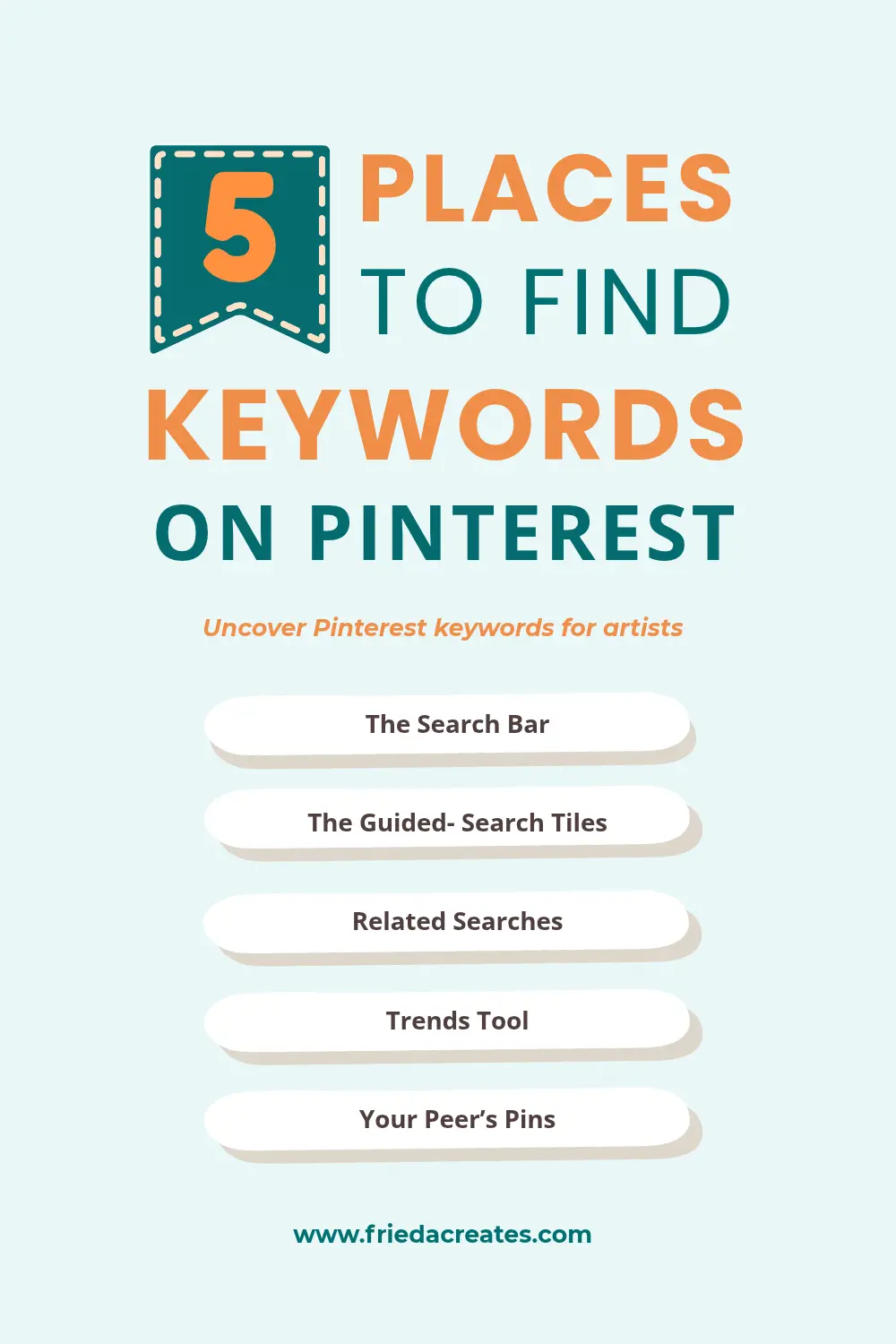
Pin to your Keywords Board to come back to anytime ⤵️
FAQ
They’re the words and phrases people type into Pinterest search to find art like yours — such as “botanical watercolor art” or “abstract wall art for living room.” Using them in your Pins and boards helps Pinterest match your work to the right searchers.
Use Pinterest’s own tools: type a phrase in the search bar and read the autocomplete suggestions, scan the guided-search tiles, check related searches, and use the Trends tool. Note the phrases that genuinely fit your work.
No. Pinterest’s free search features give you real keyword data. A tool like Pin Inspector speeds up research and shows search volume, but it’s optional — start free.
Focus on one clear keyword or phrase per Pin, used naturally in the title, description, overlay, and board. A few closely related secondary phrases are fine; a pile of unrelated ones is not.
In your Pin title, Pin description, the text overlay on the image, your board names and descriptions, and your profile name and bio. Consistency across these tells Pinterest what you’re about.
Keywords are searchable words woven into your titles and descriptions, and they’re what Pinterest ranks on. Hashtags carry little weight on Pinterest today — put your effort into keywords.
Artists rank for the language of art — medium, subject, style, and the room a piece will hang in — not generic marketing terms. Your buyers search like collectors and decorators, so your keywords should speak their language.
Watch your outbound clicks and whether your Pins start appearing for the searches you’re targeting. Give fresh Pins a few weeks to index and rank before judging.